TikTok Ads for Travel and Hospitality Brands by Market
Travel demand is directional: a destination sells to source markets. How to structure TikTok campaigns around booking windows, seasonality and market-specific creative.
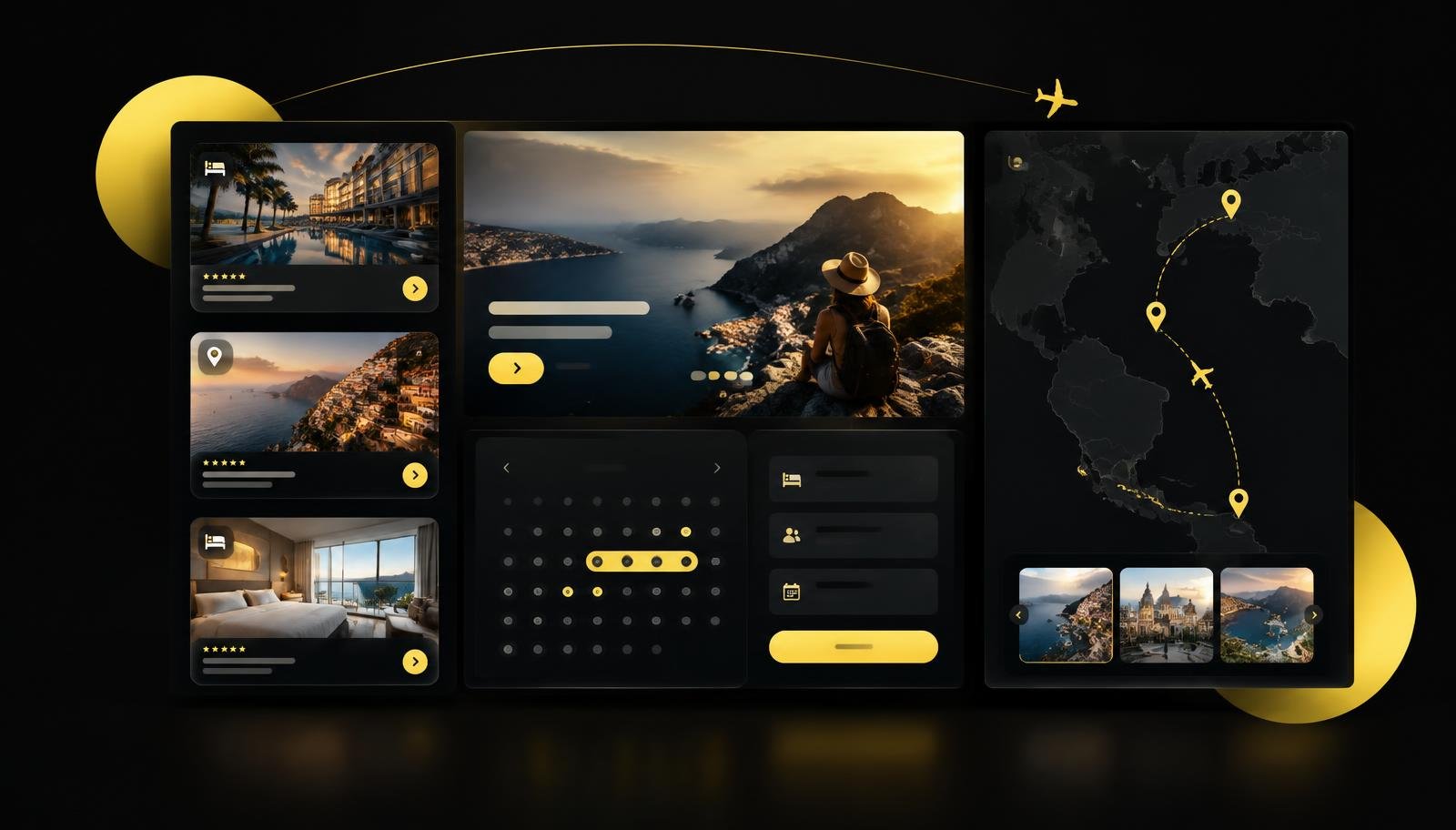
Travel advertising has a structure that most performance frameworks ignore: demand is directional. A hotel in one country sells to travellers in several others, each with a different booking window, a different seasonal calendar, a different price sensitivity and a different set of expectations about what a good trip looks like. This article treats each source market as a separate campaign problem and shows how to plan, measure and scale accordingly.
The short answer: target source markets rather than the destination's own country, plan creative and budget around each source market's booking window and season, measure a booking event with a long enough attribution view to reflect real consideration time, and never promise availability or pricing the property cannot honour.
Source markets, not one audience
The first structural decision is to name your source markets explicitly. A coastal resort might sell to two or three nearby countries in shoulder season, to long-haul markets in peak season, and to domestic travellers on weekends. Those are different products in practice: different trip lengths, different average spend, different ancillary revenue, different cancellation behaviour.
- List source markets by historic revenue contribution, not by perceived prestige.
- Record average booking value, average stay length and lead time per source market.
- Note the language, currency and payment expectations of each market.
- Separate campaigns or ad sets per source market so pacing and cost per booking are visible.
- Keep domestic and international demand apart; they respond to different messages and price points.
Structural separation is what makes any of this actionable. The trade-offs are covered in how to structure TikTok ad campaigns, and the wider multi-market operating model in how to run TikTok Ads in multiple countries.
Booking windows change the media plan
Travel is bought in advance, and the length of that advance differs by market and by trip type. A long-haul family holiday may be considered for months; a city break may be booked within a fortnight. If your campaign calendar ignores this, you will advertise to long-haul markets after their decision has already been made.
- 1Establish the typical lead time per source market from your own booking data.
- 2Work backwards from the arrival period to set an awareness start date for each market.
- 3Run consideration-stage content during the research window and stronger offers near the decision point.
- 4Hold retargeting budget for the tail of the window, when comparison shopping happens.
- 5Report on arrival month as well as booking month, so the two calendars are never confused.
Because the reporting calendar and the travel calendar diverge, time zones and window definitions matter more here than in most accounts. The practical mechanics are in TikTok Ads time zones and campaign scheduling, and the annual planning view in our seasonal marketing calendar for global campaigns.
Creative: show the experience, honestly
Travel is one of the few categories where TikTok's native format is an advantage rather than a constraint. Short, first-person, unpolished footage of a real place performs because it looks like something a traveller filmed. Over-produced brochure films read as advertising and are skipped.
Concepts worth testing per source market
- The arrival moment — what the guest sees in the first minutes.
- A specific day plan, from morning to evening, at realistic pace.
- One detail the property is genuinely known for, shown rather than claimed.
- Practical answers: transfer times, what to pack, whether a car is needed.
- Seasonal reality, including what the destination is like outside peak weeks.
Two cautions specific to this category. First, creative rights: if you use creator or guest footage, secure permission in writing for paid usage, including duration and markets. Second, accuracy: do not show a room type, view, facility or weather that a guest will not reliably receive. Beyond the reputational cost, misleading representations create policy exposure under the TikTok Advertising Policies. Localise per source market using the method in TikTok Ads localisation, and iterate on the cadence in how to test TikTok ad creatives.
Seasonality and inventory reality
Hospitality has a constraint most advertisers do not: finite inventory with perishable value. An empty room tonight cannot be sold tomorrow, and a fully booked peak week does not need advertising at all. Media budget should follow the gap between forecast occupancy and target occupancy, not a flat monthly split.
| Demand situation | Media priority | Message emphasis |
|---|---|---|
| Peak weeks nearly full | Reduce spend | Protect rate; promote higher-value room types or add-ons |
| Shoulder season soft | Increase spend | Value, weather reality, shorter stays |
| Low season | Selective spend | Local and nearby markets, events, off-peak reasons to visit |
| New route or new market | Test budget | Awareness and practical information |
| Late availability | Short bursts | Nearby source markets with short lead times |
Track the rate implications alongside volume: filling rooms by discounting can look like a media success while reducing revenue per available room. Use the profit calculator and break-even ROAS calculator on net contribution per booking, after commissions, rather than on gross booking value.
Measurement in a long, fragmented journey
Travel journeys are long and multi-device: discovery on a phone in the evening, research over several days, booking on a laptop or through a third party. That fragmentation means strict last-click measurement will systematically under-credit discovery channels and over-credit the final branded touch.
- 1Define one primary booking event and implement it consistently across markets, as described in how to track TikTok Ads conversions.
- 2Choose an attribution window that reflects your real booking lead time, and freeze it for the test period.
- 3Where bookings occur through third-party channels, agree in advance how they will be credited and state the limitation on reports.
- 4Use enquiry and high-intent page events as leading indicators while bookings accumulate.
- 5Review market performance on rolling periods rather than single days, following how to analyse TikTok Ads.
- 6Reconcile against the property management system monthly, since booking data there is the commercial truth.
For analytics configuration and reporting time zone behaviour, the Google Analytics documentation is a useful reference, and TikTok for Business documents current platform measurement options, which differ by market and may change.
Audiences for consideration-heavy purchases
Because consideration is long, audiences built from engagement are unusually valuable in travel. Video viewers, page visitors who checked dates, and past guests all warrant different messages. Keep them segmented by source market so language, currency and flight practicality are correct, and use custom audiences and retargeting to answer the specific hesitation rather than to repeat the original ad.
Past guests deserve their own treatment. Returning-guest campaigns typically carry the best economics in the account, and they are also the least dependent on peak-season auction pressure.
A worked example
A boutique hotel group runs one campaign targeting several countries with a single English-language brand film, reporting on cost per booking by month. Peak months look efficient, shoulder months look poor, and the group concludes the channel only works in season. Segmenting by source market tells a different story: two nearby markets book at short notice and convert well in shoulder season, while a long-haul market was being advertised to six weeks after its typical decision point.
The revised plan splits source markets into separate ad sets, starts long-haul awareness months earlier, concentrates nearby-market budget on shoulder weeks with short-lead-time messaging, replaces the brand film with locally narrated day-plan videos, and reports on arrival month alongside booking month. The occupancy gap closes in shoulder season without discounting peak rate — a result the original blended report could never have revealed.
Conclusion
Travel and hospitality reward advertisers who respect the direction of demand. Name your source markets, plan around each one's booking window and season, spend against the occupancy gap rather than a flat calendar, show the experience truthfully with properly licensed footage, and measure with a window long enough to reflect real consideration. Run each new source market through our country expansion readiness checklist first, and confirm current targeting and policy requirements in the TikTok Ads Help Center, since availability differs by market and may change.
Frequently asked questions
Should a hotel target its own country or the countries guests come from?
Target the source markets guests travel from, separated so each can be measured and paced independently. Domestic demand is usually a distinct product with different stay lengths and price expectations, so keep it in its own campaign rather than blending it with international demand.
How far in advance should travel campaigns start?
Work backwards from each source market's typical booking lead time, which you can take from your own reservation data. Long-haul markets often require awareness activity months before arrival, while nearby markets may book within weeks, so a single start date for all markets almost always misses one of them.
Can I use guest or creator videos in paid ads?
Only with written permission covering paid usage, the markets involved and the duration. Confirm that any music or third-party content in the footage is cleared for advertising use as well, since rights that permit organic posting do not automatically extend to paid promotion.
How should bookings made through third parties be measured?
Agree the treatment before launch and state it on every report, because those bookings frequently cannot be attributed directly. Use on-site enquiry and date-check events as leading indicators, and reconcile monthly against the property management system, which holds the commercial truth.
Should budget be flat across the year?
No. Spend should follow the gap between forecast and target occupancy, which means reducing investment in weeks that are already selling and concentrating it on shoulder and low-season gaps. Judge the result on net contribution per booking after commissions, not on gross booking value.
Which creative style performs best for travel?
Authentic, first-person footage of the real experience generally outperforms polished brand films, because it matches how travel content is consumed on the platform. Practical information — transfer times, what a day actually looks like, seasonal reality — tends to convert better than aspirational imagery alone.
Keywords covered in this article
The topics and search terms this guide addresses.
Primary keyword
TikTok Ads for travel brands
Related keywords
- hospitality advertising strategy
- hotel marketing TikTok
- source market targeting
- travel booking window advertising
Topics
- travel
- hospitality
- international
- tiktok ads