TikTok Ads Landing Page Conversion Rate by Country: A Practical CRO Framework
The same page rarely converts equally in two markets. A diagnostic sequence for finding out whether the gap is speed, payment, trust, wording or measurement.
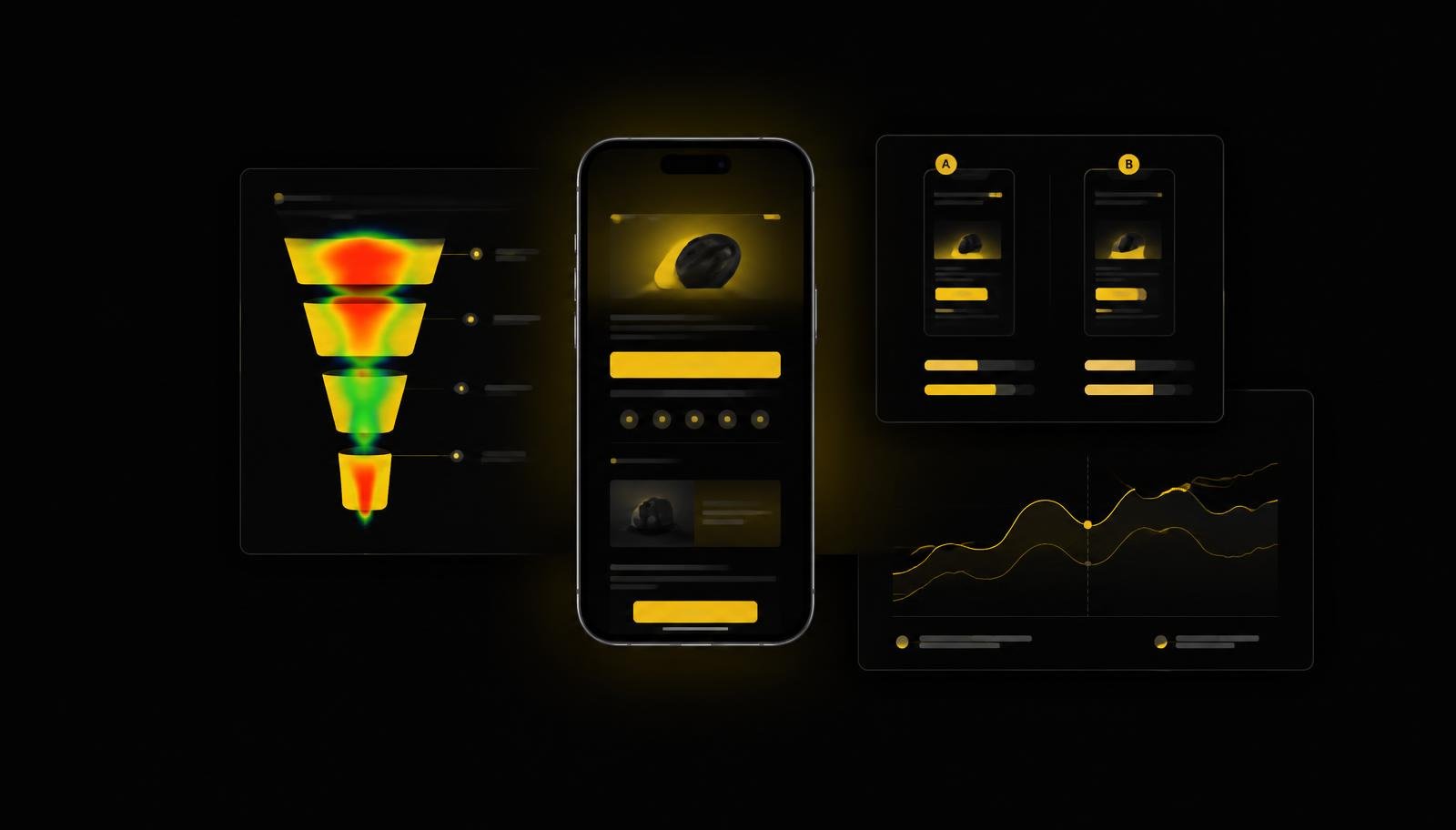
Two markets receive the same creative, the same offer and the same budget. One converts acceptably, the other does not. The instinct is to blame the audience or the creative, but in most accounts the difference sits after the click — in load speed on a slower network, in a missing payment method, in a delivery estimate nobody can find, or in a trust signal that means nothing locally. This article gives a diagnostic sequence for conversion rate differences between countries, and a testing approach that produces reliable answers.
The short answer: isolate the funnel step where the markets diverge, rule out measurement differences first, then work through speed, payment, trust, clarity and form friction in that order. Test one change at a time per market, and never assume a winning variant in one country will win in another.
Step one: make sure the gap is real
Before optimising anything, confirm you are comparing like with like. A surprising share of "conversion rate problems" are reporting artefacts.
- Check that the conversion event fires identically on each market's page or subfolder — a missing tag on one localised template produces exactly this symptom.
- Confirm the event definition and its parameters are the same, including currency values.
- Check consent behaviour: if one market's banner blocks measurement more often, its conversion rate is understated rather than lower.
- Confirm the attribution window and reporting time zone are the same for both markets.
- Compare periods of equal length that contain no schedule or budget changes.
Our implementation guide, how to track TikTok Ads conversions, covers event and deduplication setup, and the Google Analytics documentation explains how property settings such as reporting time zone affect day grouping. Only once measurement is verified is a conversion rate difference worth investigating.
Step two: locate the divergence in the funnel
Conversion rate is a summary, not a diagnosis. Break the journey into steps and compare each market at each step. The first step where the markets diverge tells you what kind of problem you have.
| Step where markets diverge | Likely cause | First thing to check |
|---|---|---|
| Click to page view | Load failure or slow page | Page weight and time to first render on mobile |
| Page view to engagement | Language, relevance or credibility | Above-the-fold copy and first image |
| Engagement to intent action | Offer clarity or price presentation | Currency, tax, delivery cost and time |
| Intent action to checkout start | Payment or account friction | Available payment methods and guest checkout |
| Checkout start to completion | Form mechanics or unexpected costs | Address and phone validation, duties, final total |
Read the data with the habits described in how to analyse TikTok Ads: small-volume markets produce noisy step rates, and a single day is never enough to justify a redesign.
Step three: speed, on the market's real conditions
Speed is the most under-diagnosed cause of cross-market conversion gaps. A page that feels instant on an office connection can be slow on a mid-range phone on a congested mobile network, and TikTok traffic is overwhelmingly mobile. Differences in device mix and network quality between countries are enough to produce a large conversion gap with no other cause.
- 1Measure the page on a throttled mobile connection, not on desktop wifi.
- 2Reduce image weight and serve appropriately sized assets for mobile viewports.
- 3Remove third-party scripts that are not essential, especially those loading before first render.
- 4Serve content from a location reasonably close to the market, or via a content delivery network.
- 5Check font loading, which frequently delays the first meaningful paint.
- 6Re-test after each change rather than bundling several and hoping.
The Google Search Central documentation explains page experience signals in more depth, and the same measures that help search visibility usually help conversion on slow networks.
Step four: payment, delivery and total cost
This is where most genuinely commercial gaps live. A visitor who cannot pay the way they normally pay will not adapt; they will leave. The same applies to a delivery promise they cannot evaluate, or a total that changes at the final step.
- Offer the payment methods the market actually uses, displayed as recognisable logos.
- Show price in local currency from the first page, not only at checkout.
- State tax treatment and any duties before the final step.
- Show a delivery time and cost the visitor can believe, including for remote regions.
- Allow guest checkout; forcing account creation is a common single-point cause of abandonment.
- For commerce platforms, follow the market setup guidance in the Shopify markets documentation or the equivalent for your stack.
If your market comparison covers both your own site and an in-platform commerce surface, the differences are structural rather than cosmetic; our comparison of TikTok Shop ads versus website ads sets out where each tends to convert better.
Step five: trust signals are local
Trust does not travel. A review count that impresses in one market is unverifiable in another if the reviews are in a foreign language. A payment badge that reassures one audience is unfamiliar elsewhere. Local phone numbers, local addresses, locally recognised shipping partners and local-language reviews all carry disproportionate weight for a first-time buyer who has just discovered the brand in a video.
- Show reviews written in the visitor's language, and enough of them to be credible.
- Display a contact route the local visitor recognises, with realistic response expectations.
- Present return and refund terms plainly, in local terms.
- Use locally familiar security and payment indicators rather than a generic badge set.
- Avoid claims you cannot substantiate; unverifiable superlatives reduce trust and create policy risk under the TikTok Advertising Policies.
Step six: message match between ad and page
TikTok traffic arrives with a very specific expectation set by the first seconds of a video. If the page does not restate that promise immediately — same product, same benefit, same offer — the visitor concludes they have arrived somewhere else. Message match matters even more across markets, because a localised page is often built from a template that drops the specificity of the original.
- 1Restate the ad's promise in the first visible heading, in the local language.
- 2Use the same product visual the ad used, so recognition is immediate.
- 3Place the primary action within the first screen on mobile.
- 4Keep one primary action per page; competing calls to action dilute all of them.
- 5If the ad promised a specific offer, show that offer, not a general homepage banner.
When message match is weak, the symptom often looks like a creative problem. Separate the two by comparing click-through rate with page engagement: strong clicks and weak engagement point at the page, not the ad. The creative side of that diagnosis is covered in how to test TikTok ad creatives.
Step seven: form and checkout mechanics
Mechanical failures are common and easy to miss because they do not appear on the pages the team tests internally. Address formats, postcode rules and phone number validation differ by country, and a field that rejects a valid local entry stops the transaction entirely.
- Test a real local address and phone number in each market, end to end.
- Use input types and keyboards appropriate to each field on mobile.
- Show errors inline and in the local language, not as a generic message at the top.
- Remove optional fields; every one costs completion.
- Persist entered data when validation fails, so nobody retypes an address.
Testing discipline across markets
Cross-market CRO fails when teams run five tests at once in low-traffic markets and declare winners from noise. The constraint is volume: a market with limited weekly conversions cannot support a subtle test, and pretending otherwise produces confident wrong conclusions.
- 1Run one test at a time per market, with a single clearly defined change.
- 2Decide in advance what result would change your decision, and how long the test will run.
- 3Test large, structural changes in small markets and subtle refinements only in high-volume markets.
- 4Apply a winning idea to another market as a new test, not as a settled fact.
- 5Keep a written log of what was tested, where, and what happened, so the same test is not repeated next quarter.
- 6Hold media settings stable during the test so the traffic mix does not change underneath it.
For turning conversion rate improvements into media decisions, use the conversion rate calculator and break-even ROAS calculator: a page improvement raises the cost per click you can profitably pay, which is often the fastest route to opening a market that previously looked unviable.
A worked example
A homeware brand runs the same offer in three markets. Two convert similarly; the third converts at roughly half the rate. Creative is blamed for a month. The funnel breakdown shows clicks and page views matching closely, engagement slightly lower, and a sharp drop at checkout start.
Three causes are found. The market's most common payment method was absent. The delivery estimate appeared only after address entry, and it was considerably longer than in the other markets. Phone validation rejected the local number format. Fixing the payment option and surfacing delivery time above the fold closes most of the gap; the validation fix removes the remainder. No creative change was needed, and the media team's original targets became achievable in that market for the first time.
Conclusion
Cross-country conversion differences are usually explainable, and usually fixable. Verify measurement, find the step where markets diverge, then work through speed, payment and total cost, local trust signals, message match and form mechanics. Test one change at a time and respect the volume each market can support. For the wider funnel adaptation work, see our guide to TikTok Ads localisation and the country expansion readiness checklist. Availability of payment options, commerce features and targeting differs by country and may change, so confirm current requirements with TikTok for Business and the TikTok Ads Help Center.
Frequently asked questions
Why does the same landing page convert differently in two countries?
Most often because of factors after the click rather than audience quality: network speed and device mix, missing local payment methods, unclear delivery cost and timing, trust signals that do not translate, or form validation that rejects valid local input. Measurement differences between markets are also a common cause of an apparent gap.
What should I check first when a market underperforms?
Verify that the conversion event fires correctly on that market's page and that consent behaviour and attribution settings match. Once measurement is confirmed, break the funnel into steps and find the first step where the markets diverge; that step identifies the category of problem.
How important is page speed for TikTok traffic?
Very, because the traffic is overwhelmingly mobile and often on variable networks. Always measure on a throttled mobile connection rather than office wifi, reduce image weight and non-essential scripts, and re-test after each individual change so you can attribute the improvement.
Can I reuse a winning test result in another market?
Treat it as a hypothesis, not a conclusion. Payment habits, trust expectations and reading patterns differ, so re-run the change as a new test in the second market. Applying results blindly across markets is one of the fastest ways to accumulate changes nobody can justify.
How do I test in a market with low traffic?
Test only large, structural changes there — a different payment option, a visible delivery estimate, a rebuilt above-the-fold section — and leave subtle refinements to high-volume markets. Decide the duration and the decision threshold before starting, and hold media settings stable throughout.
Does improving conversion rate change my media targets?
Yes. A higher conversion rate raises the cost per click you can profitably pay, which can make a previously unviable market workable without any change to creative or targeting. Recalculate the break-even point after a confirmed improvement and update the market's ceiling.
Keywords covered in this article
The topics and search terms this guide addresses.
Primary keyword
TikTok landing page conversion rate by country
Related keywords
- international CRO framework
- mobile landing page optimisation
- market-specific conversion rate
- TikTok Ads post-click experience
Topics
- cro
- landing pages
- international
- tiktok ads