TikTok Ads for Local Service Businesses: Country-Based Lead Generation Strategy
Local services do not need reach — they need qualified enquiries inside a service radius. Here is how to structure TikTok lead generation for one location, then many.
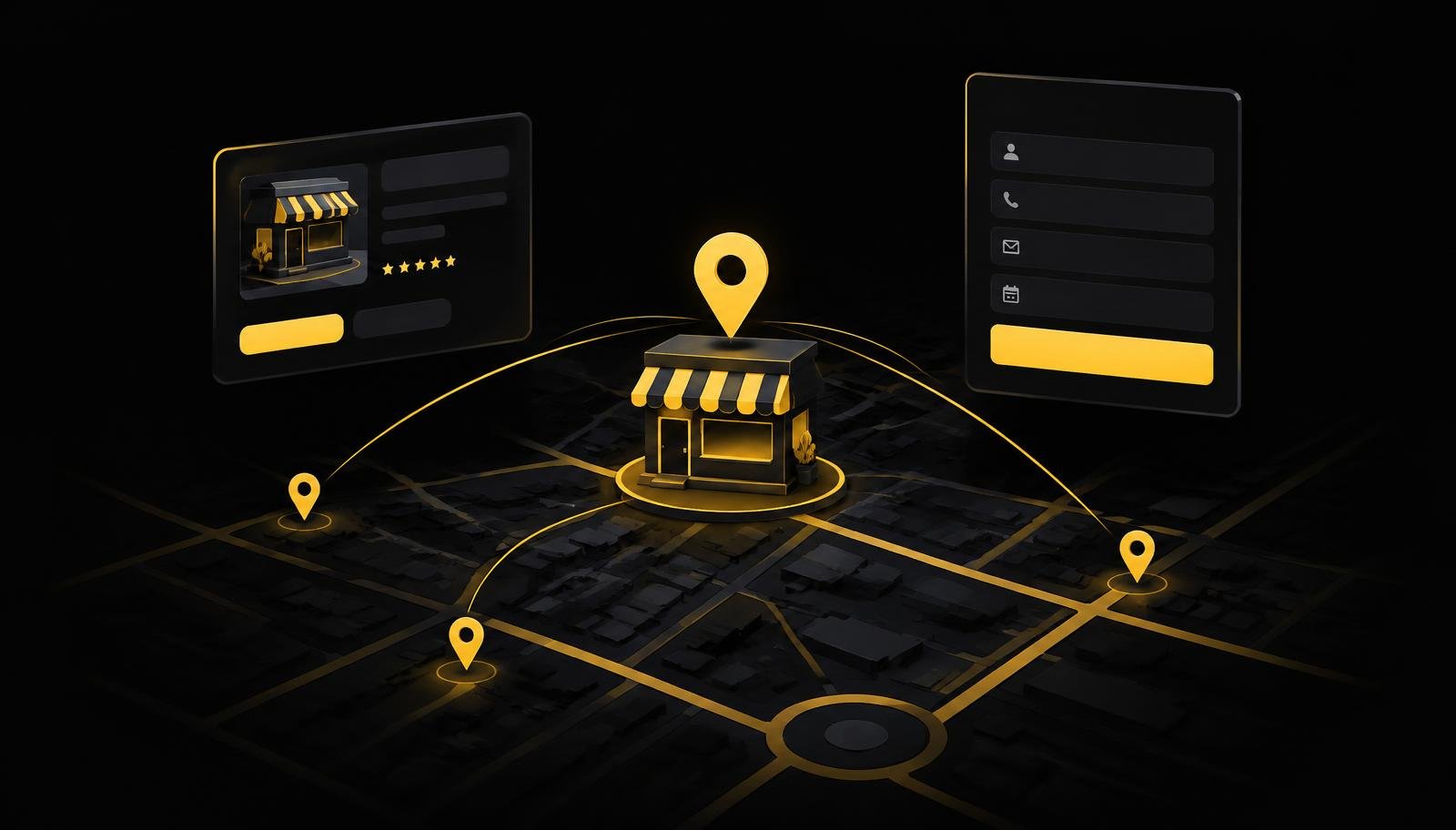
Local service businesses — dental clinics, driving schools, home renovation firms, gyms, legal practices, cleaning companies — have an advertising problem that most TikTok guidance ignores. They do not need national reach, they need a predictable number of qualified enquiries inside a travel radius, answered quickly enough to convert. This article sets out a lead generation approach built for that constraint, and then explains how to repeat it country by country without losing control of quality.
The short answer: target the service area rather than the country, optimise for a qualified enquiry rather than a raw form fill, make speed of follow-up part of the media plan, and treat each location as its own small account with its own cost-per-booked-job ceiling.
Why local services behave differently on TikTok
Three structural differences shape everything else. First, the addressable audience is small, so frequency accumulates quickly and creative fatigue arrives sooner than in national e-commerce. Second, the conversion is usually a human interaction, which means lead quality is decided after the click by someone answering a phone. Third, capacity is finite: a clinic with four chairs cannot absorb unlimited demand, so the goal is a steady flow rather than a spike.
Those differences make measurement discipline unusually important. A campaign can look excellent on cost per lead while producing enquiries nobody can serve, and it can look expensive on cost per lead while delivering the best booked-job economics in the account.
Define the commercial target before the campaign
Start from the job, not the lead. Take the average revenue per completed job, subtract delivery cost, and apply the historic rate at which enquiries become booked jobs. That produces a defensible cost-per-enquiry ceiling, which is the only number that should drive optimisation decisions.
- 1Average revenue per job and contribution margin per job.
- 2Enquiry-to-booking rate, measured over a period long enough to be stable.
- 3Resulting maximum cost per enquiry, calculated from margin and booking rate.
- 4Monthly capacity, expressed as a maximum number of jobs the business can deliver.
- 5A weekly enquiry target that fills capacity without overflowing it.
Our break-even CPA calculator and customer acquisition cost calculator make this arithmetic quick, and writing the result down prevents the common argument in month two about whether a given cost per lead is good.
Geographic targeting for a service radius
Country-level targeting is almost always wrong for a local service. Define the area the business will actually travel to, then build targeting to match as closely as the available options in the market allow. Geographic targeting options differ by country and may change, so confirm what is currently available for your market in the TikTok Ads Help Center before planning around a specific granularity.
- Start with the tightest area that can still deliver enough weekly volume to learn from.
- Exclude areas the business will not serve, so enquiries do not arrive from outside the radius.
- Where volume is too small for stable delivery, widen the radius before narrowing the audience — geography is usually the safer lever.
- For multi-location businesses, give each location its own ad set so cost per enquiry is visible per branch.
- State the service area in the ad itself; naming the city or district filters the audience for free.
Keep audience settings simple. In small geographies, layering interests on top of a tight radius often reduces delivery without improving quality. The reasoning behind that trade-off is set out in how to target audiences on TikTok Ads.
Choosing the conversion event
Local services can run a form on their own site, an on-platform lead form, a call, or a booking system. Each choice trades volume against quality, and the right answer depends on how the business handles follow-up.
| Conversion path | Typical volume | Typical quality | Best when |
|---|---|---|---|
| On-platform lead form | Higher | Lower per lead | Follow-up is fast and scripted |
| Site form with qualifying questions | Moderate | Higher | The team prefers fewer, better enquiries |
| Phone call | Lower | Highest | Someone reliably answers during ad hours |
| Online booking | Moderate | High | The service can be booked without a consultation |
Add one or two qualifying questions rather than five. Each additional field reduces submissions, but a single well-chosen question — postcode, property type, urgency, budget band — removes most unserviceable enquiries. Your objective selection should follow from this decision; see how to choose a TikTok ad objective.
Follow-up speed is a media variable
For local services, the gap between enquiry and first human contact frequently determines conversion more than any targeting setting. An enquiry generated by a short-form video is an impulse enquiry: the person was not searching, they responded to something they saw. Interest decays quickly, and a call the next morning reaches a different person than a call within minutes.
- Route enquiries to a phone or CRM instantly rather than to an inbox nobody monitors.
- Send an immediate confirmation message that sets an expectation for when contact will happen.
- Align ad delivery hours with the hours someone can respond, if response capacity is limited.
- Track time-to-first-contact as a reported metric alongside cost per enquiry.
If delivery hours must be restricted, plan the schedule carefully rather than intuitively — the mechanics and pitfalls are covered in our guide to TikTok Ads time zones and campaign scheduling.
Creative that works for local services
Local service creative does not need production polish; it needs proof and specificity. The strongest concepts tend to be recognisably local and visibly real: the actual premises, the actual team, a genuine before-and-after, a short explanation of a common problem, or a straightforward answer to the question customers always ask.
Concepts to test first
- Process walkthrough: what happens from enquiry to completed job.
- Common objection answered directly, such as timing, disruption or price transparency.
- Before-and-after with the local setting visible.
- Team introduction, which builds the trust a service purchase requires.
- Frequently asked question answered in under twenty seconds.
Because the audience is small, plan for faster creative rotation than you would use nationally, and keep a testing cadence rather than a single launch batch. The structure in how to test TikTok ad creatives still applies, with shorter cycles. Avoid claims you cannot substantiate, including guarantees about outcomes, and check category-specific rules in the TikTok Advertising Policies — regulated services such as medical, legal and financial practices frequently carry extra requirements that differ by country.
Measuring lead quality, not just lead cost
Cost per enquiry is a media metric. Cost per booked job is a business metric. Connect them by passing an outcome back from the CRM, even manually at first: a weekly spreadsheet marking each enquiry as unqualified, qualified, quoted or booked is enough to change media decisions intelligently.
- 1Record the source campaign and creative on every enquiry.
- 2Tag each enquiry with an outcome within a defined window.
- 3Report cost per qualified enquiry and cost per booked job by creative and by location.
- 4Pause creative that produces volume without qualified outcomes, even when its cost per lead looks strong.
- 5Feed qualified outcomes back as your optimisation event once volume allows, following how to track TikTok Ads conversions.
For reading the resulting data without over-reacting to weekly noise, the diagnostic habits in how to analyse TikTok Ads and how to optimise TikTok Ads apply directly to small-volume local accounts, where a single good week can easily be mistaken for a trend.
Rolling out country by country
A local service model that works in one city does not automatically transfer to another country. Regulation, pricing expectations, the dominant contact channel, and even the acceptable level of directness in advertising all differ. Treat each new country as a new commercial case, run the readiness gate in our country expansion readiness checklist, and localise the post-click experience with the method in TikTok Ads localisation.
- Confirm the business is licensed and able to deliver the service in the new market.
- Check whether the market's customers prefer calls, messaging or forms, and build the funnel around that preference.
- Re-derive the cost-per-enquiry ceiling from local pricing and local margin.
- Launch one location first, prove the enquiry-to-booking rate, then replicate.
A worked example
A home installation company with three branches runs one national campaign and reports a low cost per lead. On inspection, more than a third of enquiries come from outside any branch's travel radius, and the sales team has stopped trusting the source. The account is rebuilt with one ad set per branch, tightened geography with explicit exclusions, a postcode question on the form, and instant routing into the CRM with a named owner per branch.
Cost per enquiry rises, and cost per booked job falls — which is the outcome that matters. Because each branch now reports separately, the company can also see that one branch's weaker performance is a capacity problem rather than a media problem, and can reduce its budget deliberately instead of blaming the channel.
Conclusion
Local service lead generation on TikTok is won by constraint, not by scale. Define the service area precisely, price the enquiry from the job margin, choose a conversion path the team can actually serve, respond fast, and measure booked outcomes rather than form fills. Expand to new countries one location at a time, and verify current targeting, category and policy requirements in official sources such as TikTok for Business and the TikTok Ads Help Center, because availability and rules differ by market and may change.
Frequently asked questions
Is TikTok suitable for local service businesses at all?
It can be, provided the service appeals to an audience that uses the platform and the business can respond quickly to impulse enquiries. It suits visual, explainable or before-and-after services particularly well. It suits services with very narrow eligibility or long compliance-heavy sales cycles less well, and those cases need careful expectation setting.
How small can a targeting radius be?
As small as the available geographic options allow while still producing enough weekly volume for delivery to stabilise. Granularity differs by market and can change, so confirm current options in official TikTok documentation. If volume is too thin to learn from, widen the geography before narrowing audience settings.
Should I use an on-platform lead form or my own landing page?
On-platform forms usually produce more enquiries at a lower cost per lead but require fast, disciplined follow-up. A landing page with one or two qualifying questions produces fewer, better-qualified enquiries. Choose based on your team's response capacity, and measure both by cost per booked job rather than cost per lead.
Why is my cost per lead low but my sales team unhappy?
Usually because the campaign is optimising for the easiest possible form submission, or the geography is wider than the service area. Add a qualifying question, tighten exclusions, and start reporting cost per qualified enquiry. Once qualified outcomes are fed back into optimisation, media decisions stop rewarding the wrong behaviour.
How quickly should enquiries be contacted?
As fast as the business can manage, because these are impulse enquiries rather than the result of an active search. Treat time-to-first-contact as a reported metric, send an immediate automated acknowledgement that sets expectations, and consider restricting ad hours if nobody can respond outside certain times.
How do I expand the same model into another country?
Verify the business can legally deliver the service there, re-derive the cost-per-enquiry ceiling from local pricing and margin, adapt the contact channel to local preference, and launch a single location as a test before replicating. Run the readiness checklist first so the launch measures the market rather than your setup.
Keywords covered in this article
The topics and search terms this guide addresses.
Primary keyword
TikTok Ads for local service businesses
Related keywords
- local lead generation TikTok
- service area targeting
- TikTok lead quality
- multi-location advertising
Topics
- lead generation
- local business
- international
- tiktok ads